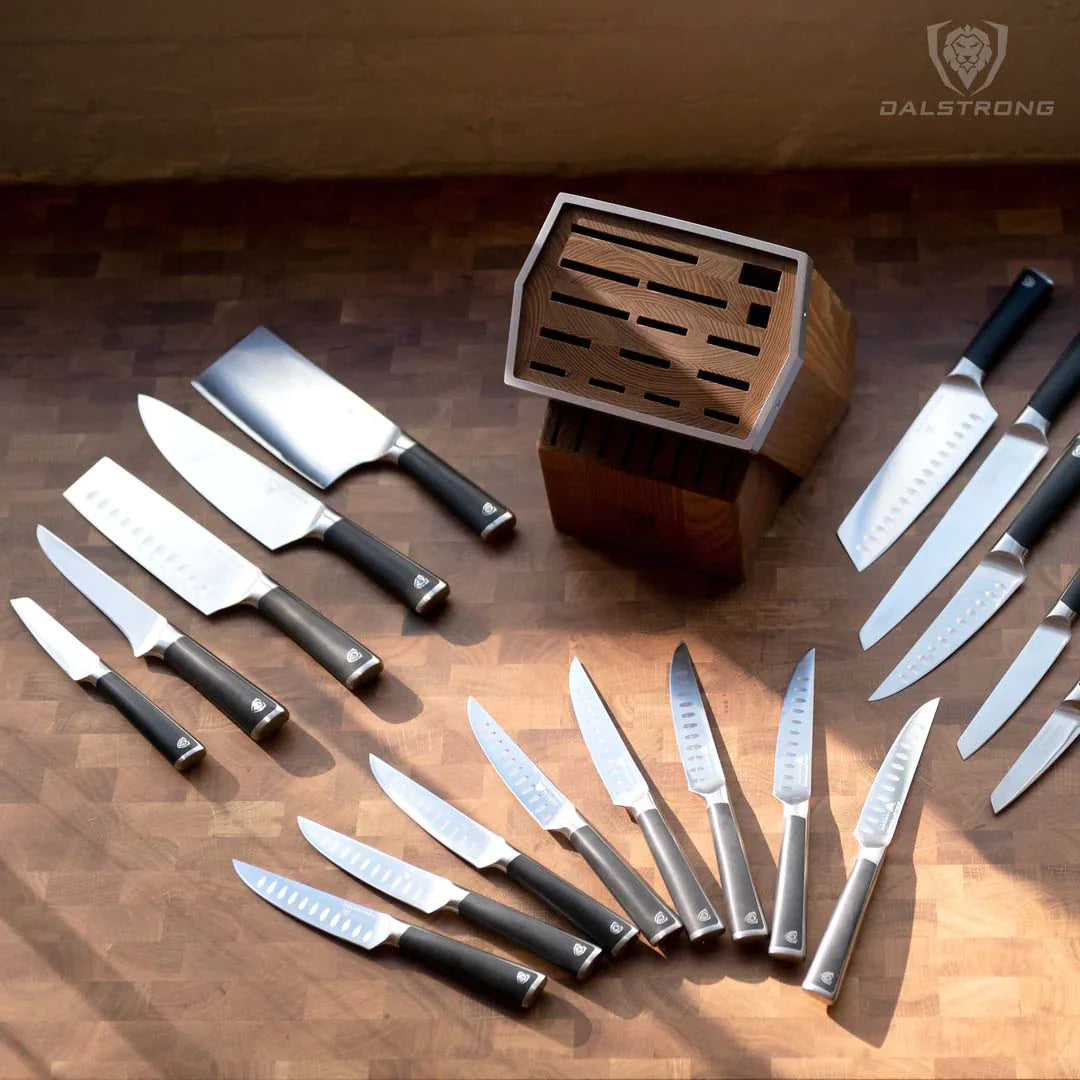
Limited Edition Collector Blades





What Is the Best Knife for Cutting Meat? A Knife for Every Job
What is the best knife for cutting meat? It depends on the job. For everyday raw meat prep, a sharp 8" chef's knife covers most of it. Use a boning knife to work around bones and joints, a long slicing and carving knife for cooked roasts and brisket, a cimiter or butcher knife for breaking down large cuts, a cleaver for chopping through bone, and steak knives at the table. Most home cooks need two or three of these, not all six.
Below is a quick-match table, a seven-step way to choose, and the Dalstrong knife for each job, with prices from dalstrong.com as of November 3, 2026.
Which knife for which meat job
| Job | Best knife type | Dalstrong example | Price (Nov 3, 2026) |
|---|---|---|---|
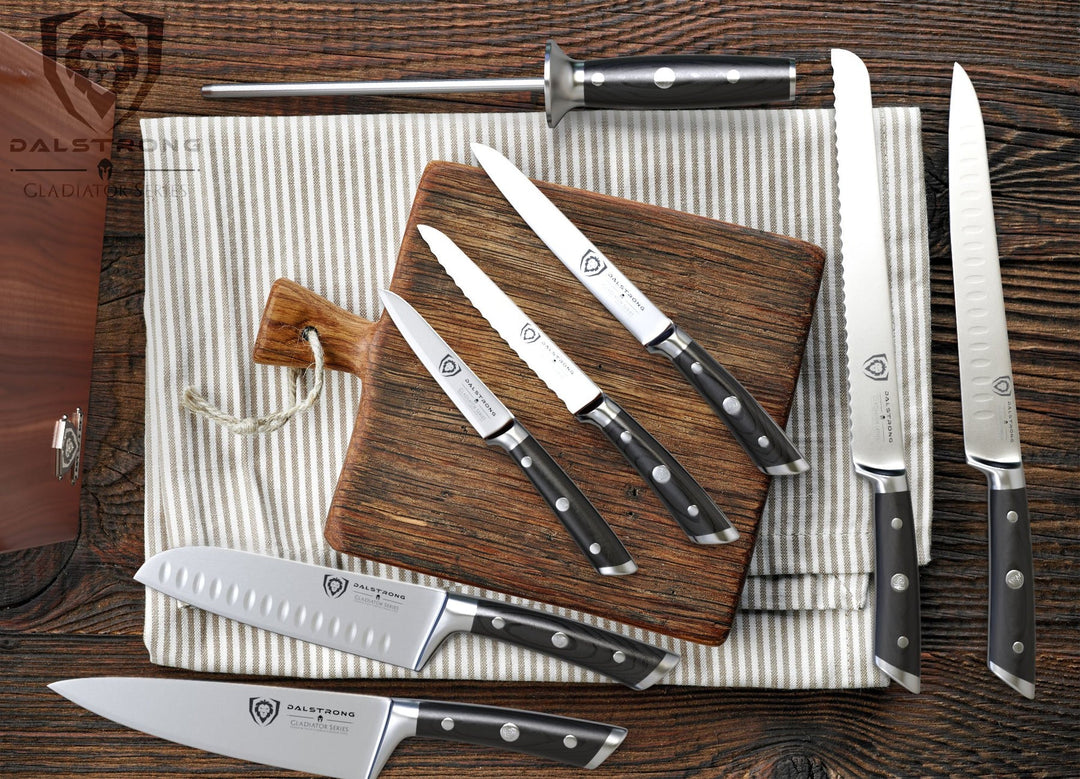
| Everyday trimming, cubing, slicing raw meat | Chef's knife | Gladiator 8" Chef's Knife | $79 |
| Deboning chicken, trimming silverskin, working around joints | Boning knife | Gladiator 6" Boning Knife | $69 |
| Carving roasts, turkey, ham and brisket | Slicing and carving knife | Gladiator 12" Slicing & Carving Knife | $99 |
| Breaking down primals, portioning steaks | Cimiter or butcher knife | Gladiator 10" Butcher's Breaking Cimiter | $89 |
| Chopping through bone and joints | Meat cleaver | Obliterator 9" Meat Cleaver | $169 |
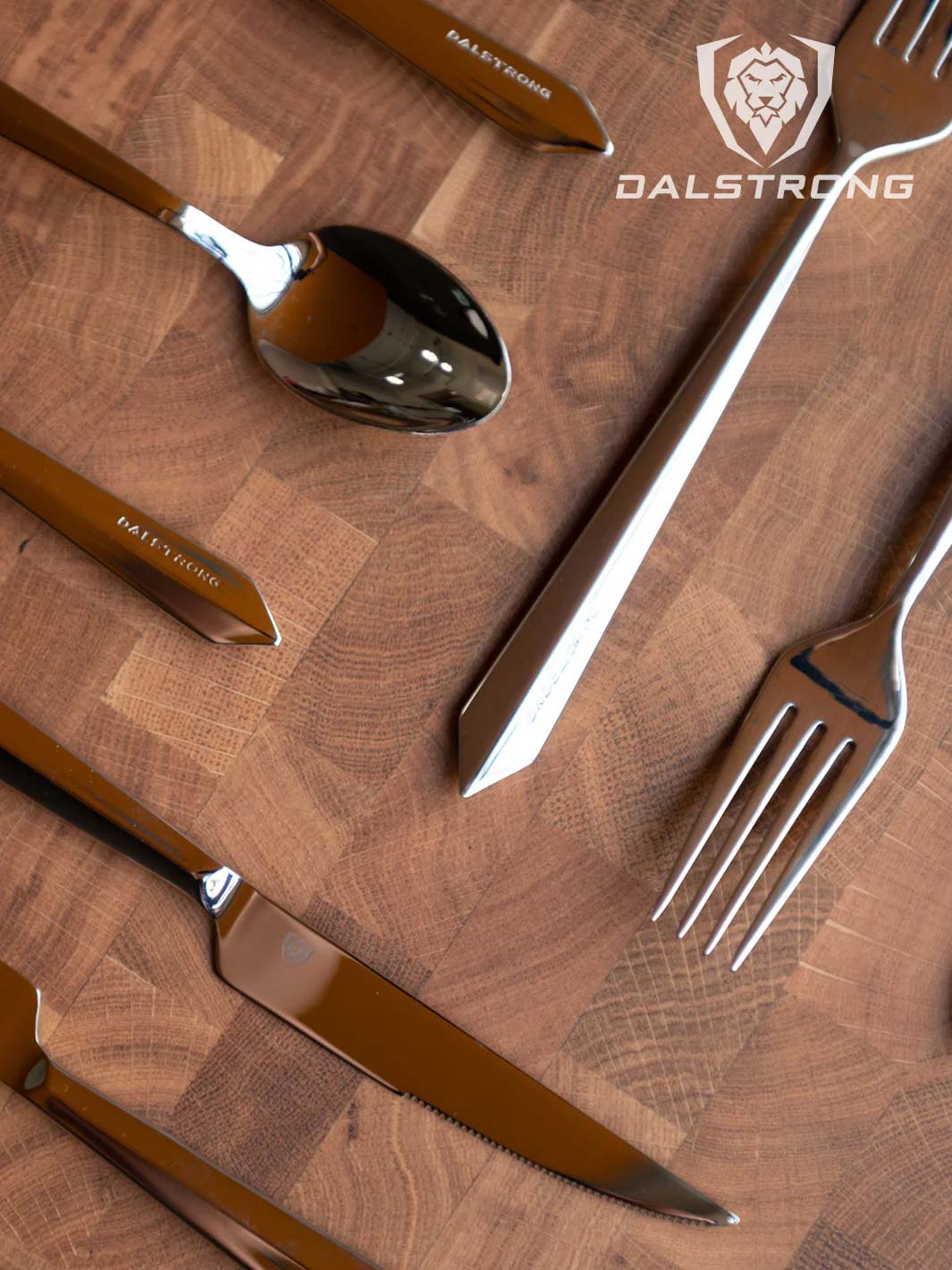
| Cutting cooked steak at the table | Steak knife | Gladiator 4-Piece Serrated Steak Set | $119 |
The Gladiator knives above are German X50CrMoV15 stainless at 54–56 HRC, according to their product pages. That's a tougher, more forgiving steel for meat work. Prices change, so check the product page before you buy.
The knife types, explained
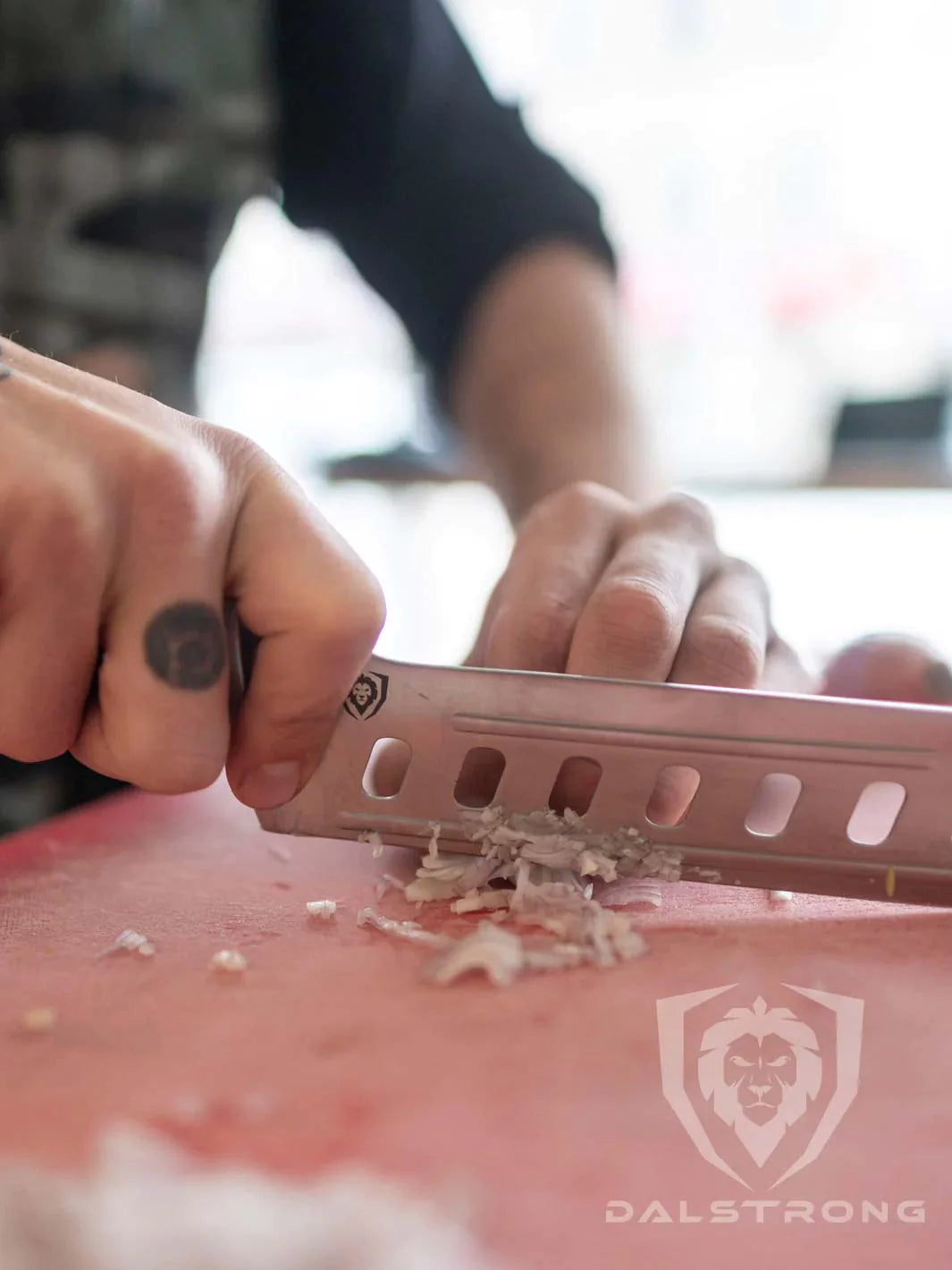
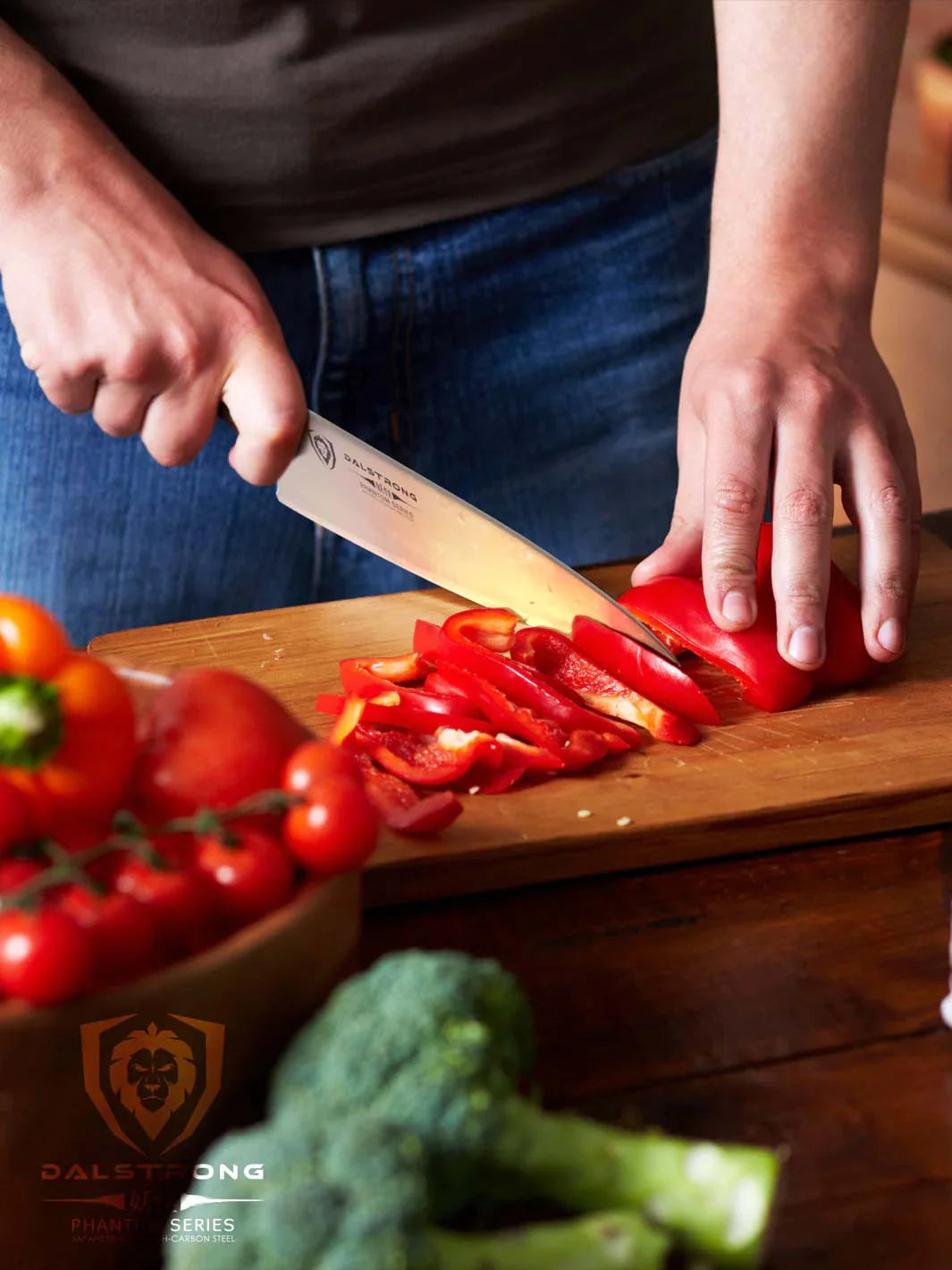
Chef's knife. This is the all-rounder. It trims fat, cubes stew meat, slices chicken breasts and minces aromatics for the marinade. If you buy only one knife, start here. See how to choose a chef's knife.
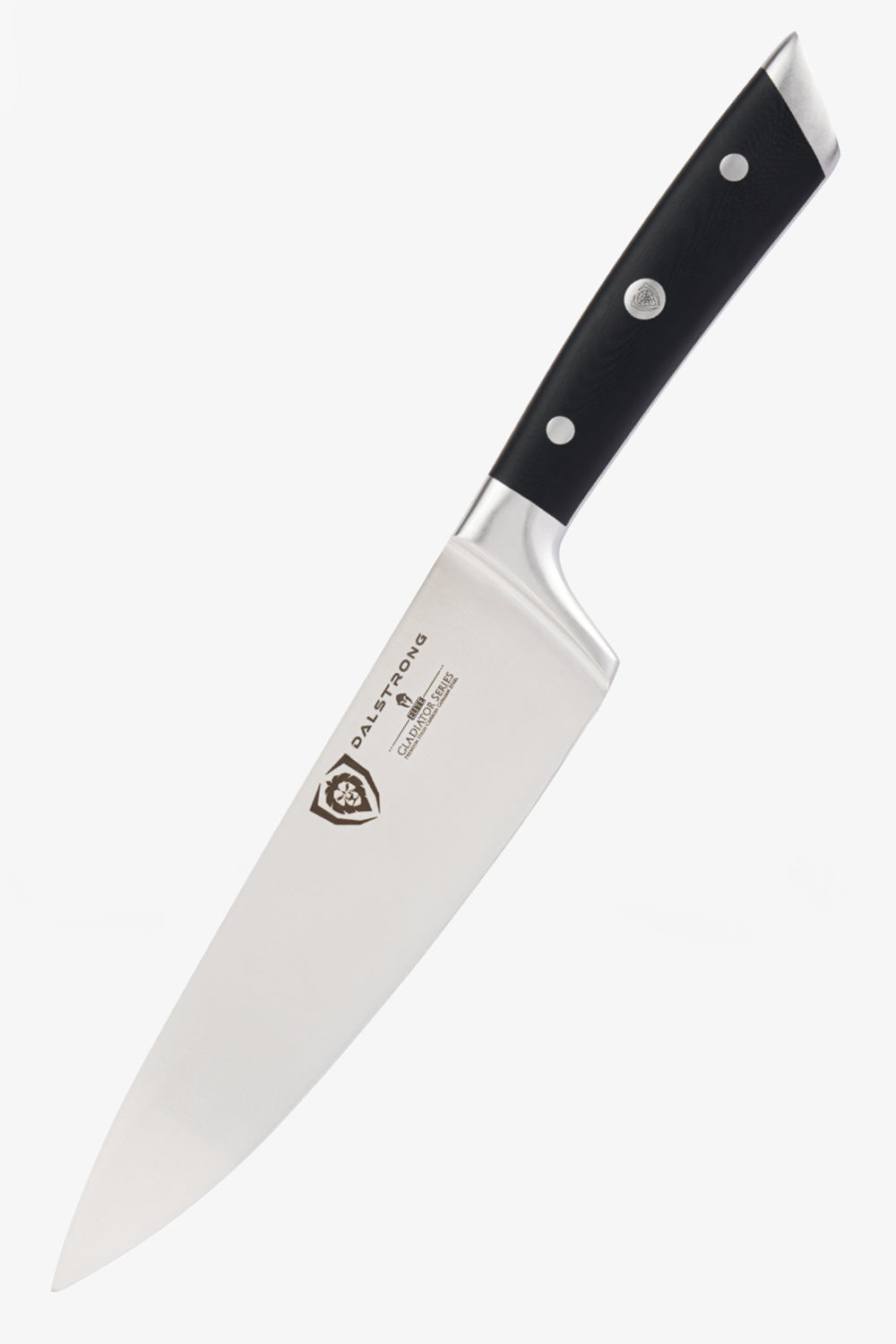
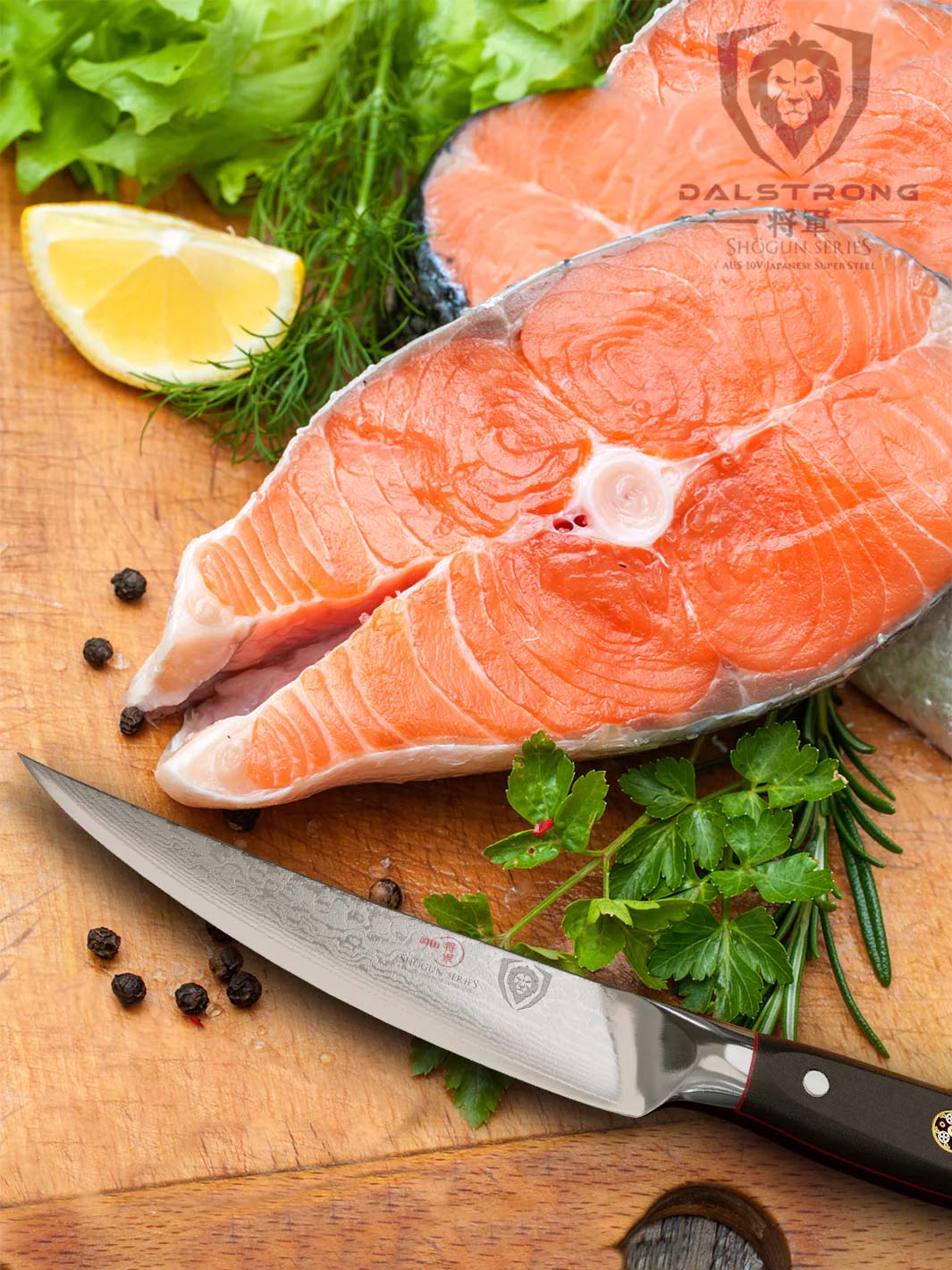
Boning knife. A narrow blade follows bone and gets into joints, so you waste less meat. Flexible blades suit poultry and fish. Stiffer blades suit beef and pork. Our boning knife guide covers flexible vs stiff.
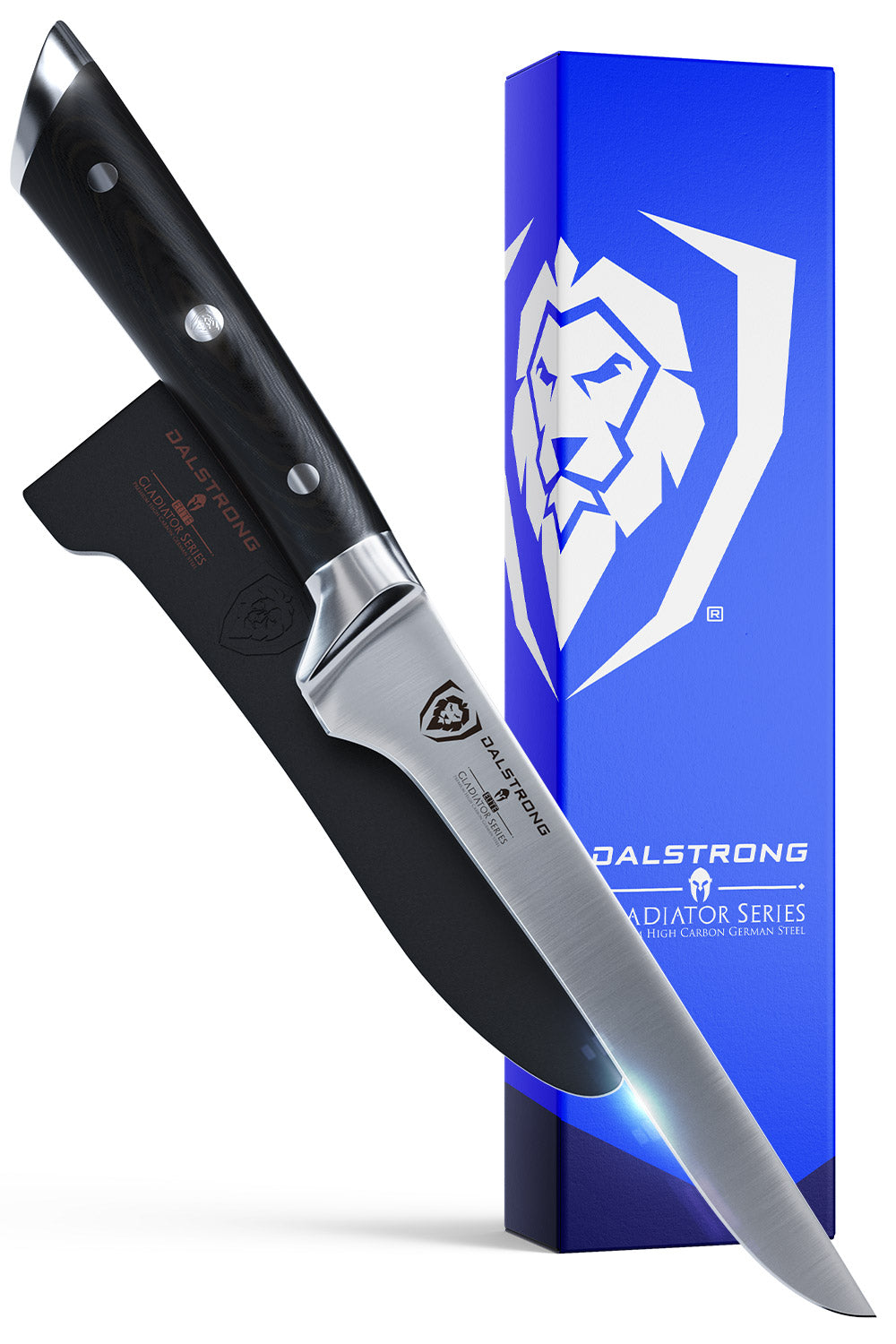
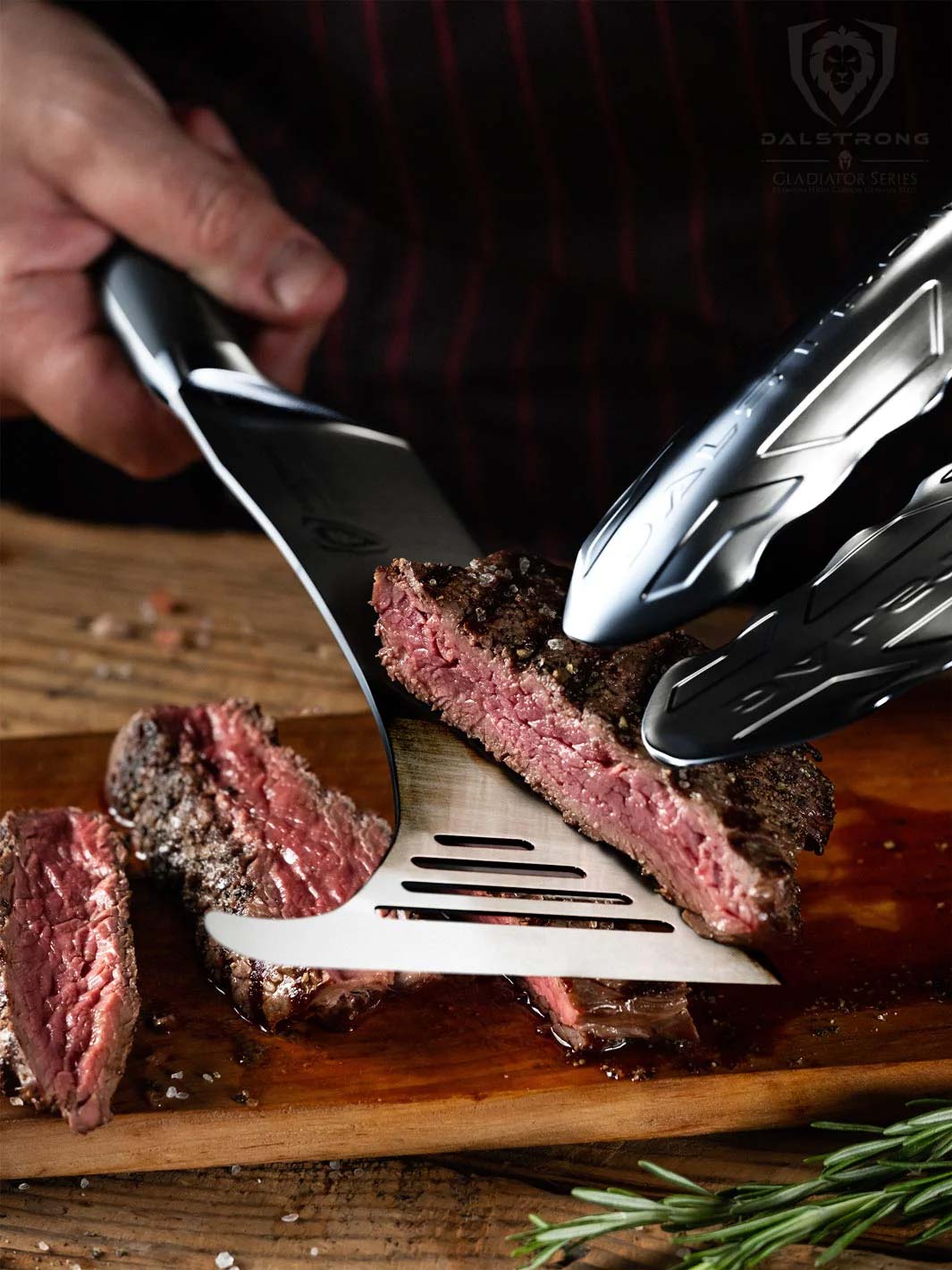
Slicing and carving knife. A long, narrow blade cuts a roast or brisket in long single strokes instead of sawing, so slices stay neat. For brisket specifically, see slicing vs trimming knives for brisket.

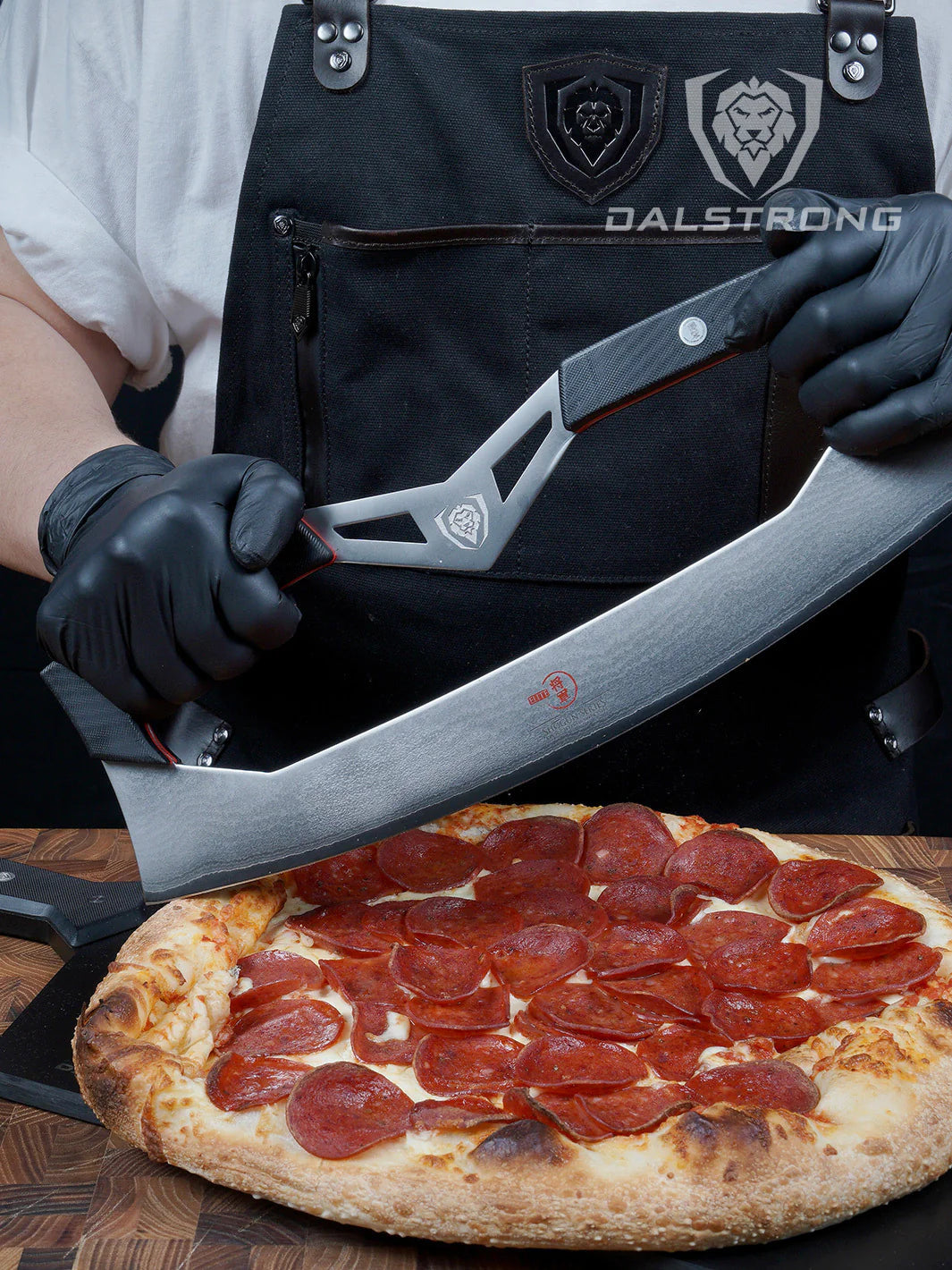
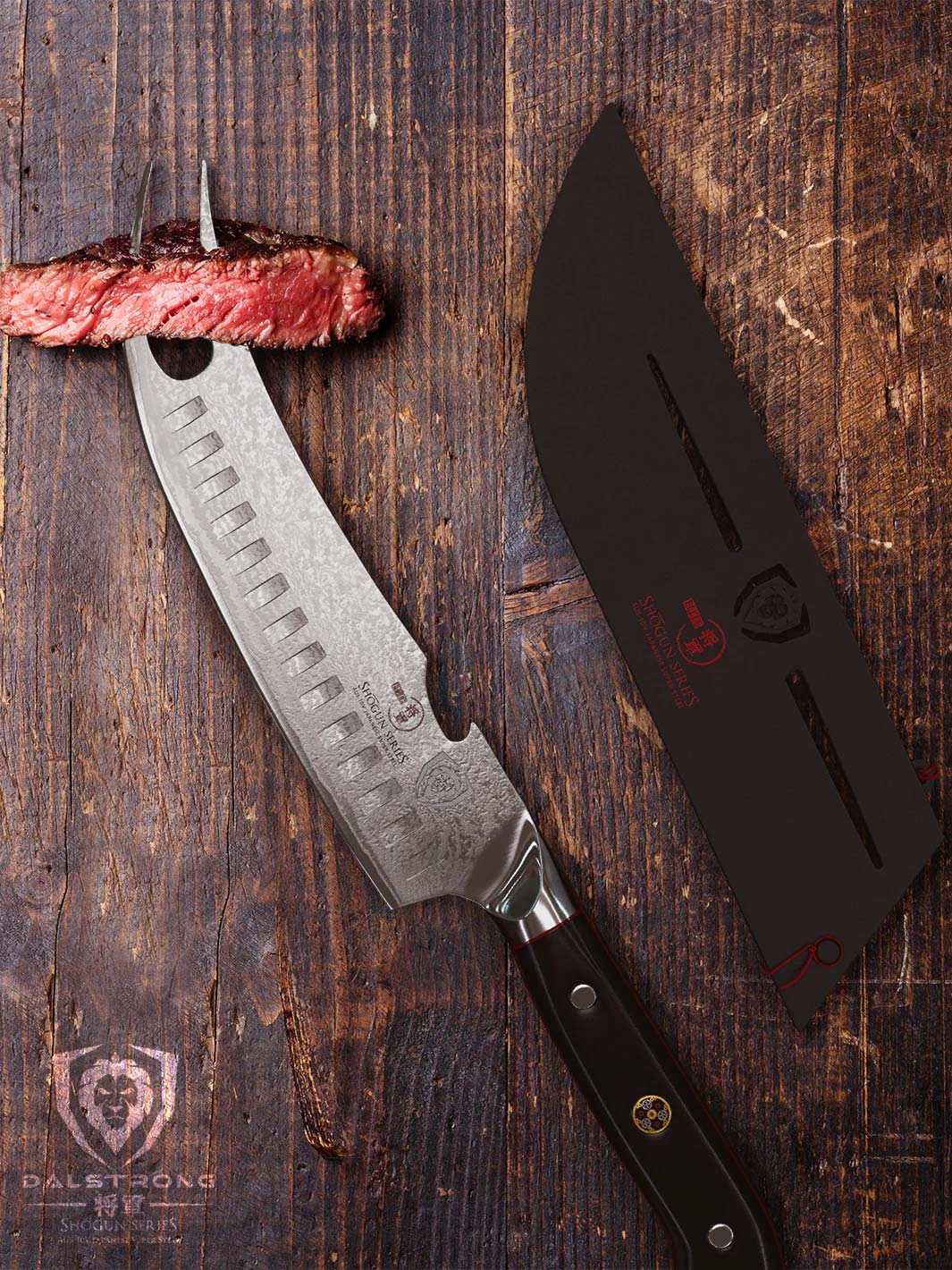
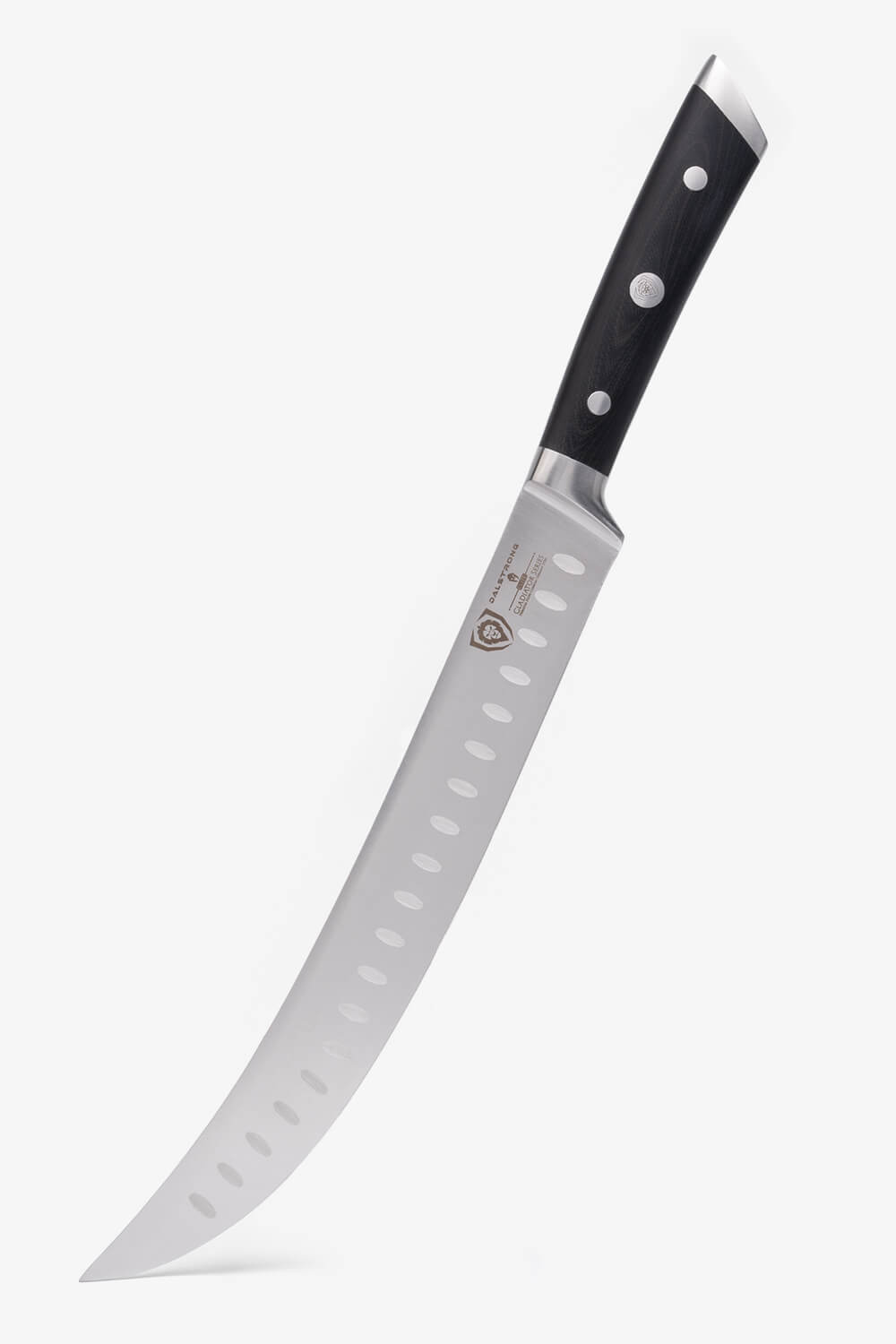
Cimiter and butcher knives. These long, curved blades are built for breaking down large cuts and portioning steaks from a subprimal. They're mainly worth it if you buy whole cuts or hunt.
Meat cleaver. The only knife here meant to go through bone. Food & Wine names the Dalstrong Obliterator its best heavy-duty cleaver. Thin Japanese-style knives shouldn't be used on bone. Shun's warranty, for example, says not to use its knives on bones or frozen food. See best cleaver.
Steak knives. These are table knives for cooked meat. Serrated edges stay useful longer between sharpenings, while straight edges cut more cleanly. See serrated vs straight-edge steak knives.
How to choose a knife for cutting meat in 7 steps
- List what you actually cut. Weeknight chicken and steak, holiday roasts, whole briskets, bone-in cuts?
- Start with a chef's knife. It handles most raw meat prep on its own.
- Add a boning knife if you debone. Buying whole chickens or bone-in cuts saves money, and a boning knife makes it easy.
- Add a slicer if you smoke or roast. Brisket, prime rib and turkey all look better carved with a long blade.
- Use a cleaver for bone. Keep chef's knives and Japanese-style blades away from bone and frozen food.
- Pick a steel you can maintain. German-style stainless like X50CrMoV15 is tough and easy to touch up. Harder Japanese steels hold an edge longer but need gentler use. See Japanese vs German knives.
- Look for a secure handle. Raw meat makes hands slippery. Full-tang knives with textured, non-porous handles such as G10 are easier to keep clean and hold.
Meat-cutting knife checklist
- Chef's knife for everyday prep
- Boning knife if you debone or trim large cuts
- Slicing and carving knife for roasts and brisket
- Cleaver for anything with bone
- A separate cutting board for raw meat, washed after each use
- Honing rod for regular touch-ups, and a sharpening plan
- Hand wash and towel-dry each knife after use
Slicing technique matters as much as the knife. Read why cutting meat against the grain is a game-changer.
Frequently asked questions
What is the best all-around knife for cutting meat?
An 8-inch chef's knife. It trims, cubes and slices raw meat for most home cooking. Add a boning knife for deboning and a long slicing knife for roasts and brisket.
What knife do butchers use?
Butchers typically use boning knives for working around bone, curved cimiter or breaking knives for large cuts, and cleavers for chopping through bone.
What knife is best for cutting cooked meat?
A long slicing and carving knife cuts roasts, turkey and brisket in clean single strokes. At the table, use steak knives.
Can I cut through bone with a chef's knife?
You shouldn't. Bone can chip or roll a chef's knife edge, especially a thin Japanese-style blade. Use a meat cleaver for bone and joints.
Serrated or straight edge for meat?
Straight edges cut raw and cooked meat more cleanly and are easier to sharpen. Serrated steak knives stay useful longer at the table between sharpenings.
Sources: Dalstrong product pages; Food & Wine cleaver testing; Kai USA Shun warranty. Checked November 3, 2026.